Another Sparrow I Can Identify

The hate mail is really piling up now.  Apparently the teeming millions of readers out there are a little tired of the recent focus on bird posts over the last couple of months.  You can’t say I didn’t warn you they were coming and if there was any way I could circumvent the birding rules (link here), trust me, I would.  But rules are rules and without them… well you would have what I affectionately refer to as a mime school zombie attack – SHUDDER.  This will not appease the author of “STOP POSTING BIRDS.  I’m absolutely sick of it.  I sit down at my computer, place my drink up on the stand, nestle into my comfy den chair and start to tickle the keys in eager anticipation of something new and exciting on the blog.  BUT NOOOOOOoooo, all I get is another damn bird!”  Or the most hurtful email of all “I’d rather listen to Hillary stumble through another woe is poor me stump calamity in her best I’m a robot impersonation than have to look at ANOTHER old bat … I mean bird”.  Harsh.  At least they didn’t threaten to vote for her if I didn’t cease feature birds here…. and because of that I can safely bring out another bird post.  Seriously, this is all my brother’s (aka Mr. Competitive) fault.. blame him, I’m just trying to stay up with him on the counts.

That would be a bird count that just had another increment thanks to today’s feathered friend.

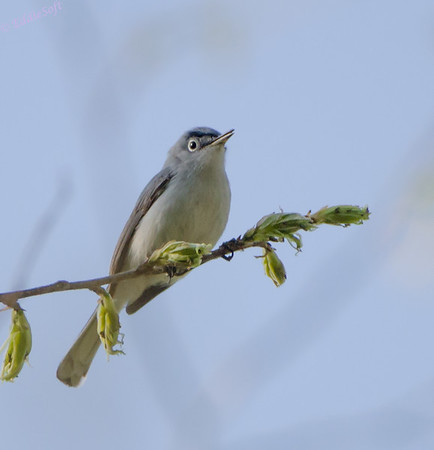
White-Throated Sparrow shot at Allerton Park in Monticello, IL

Normally I refer to the entire family as Just Another Sparrow or JASs because it is so damn hard to identify these birds.  Every once in a while I shoot a variety that has some unique enough feature that I can pick it out in the reference guides.  Previous to this post I was able to identify the White-Crowned variety (link here). Adding to that a House and a Chipping (link here).  That was probably a good 4 hours of research I’ll never get back.  As luck would have it, Ron and I were able to shoot another uniquely featured Sparrow while birding at Allerton Park in Monticello IL.

White-Throated Sparrow shot at Allerton Park in Monticello, IL

Hit the jump to see a couple more pictures and learn what this bird is

Continue reading Another Sparrow I Can Identify

A Pair You What?

“Was it over when the Germans bombed Pearl Harbor? Hell no! Germans? Forget it, he’s rolling.”  Seemed an appropriate opening since I’m pretty much on a bird post roll at the moment.  Today was a hell night on the pavement with the heat and humidity putting the hurt on (mind you not at heat stroke level in case a certain wife happens to be reading this – just hot and sticky).  The hope was it would rain on me but nooooo, it has to wait until I get home before the cooling water pours out of the sky.  Oh well, just means I’m better prepared for the Bix which is approaching FAST. Keying off the FAST word, apparently I was able to score this new featured bird thanks to some quick camera work.

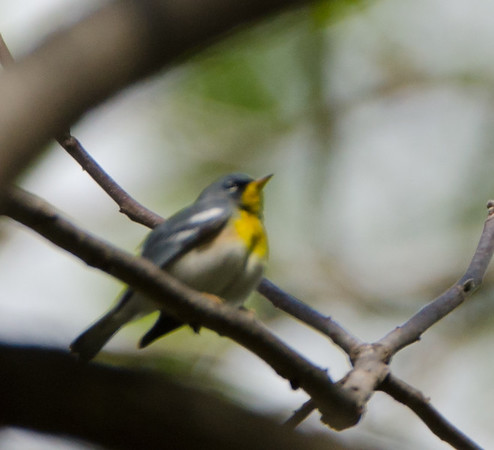
Northern Parula shot at Allerton Park in Monticello IL.

That very soft specimen is a Northern Parula.  This is another new bird from the trip with Ron to Allerton Park.  The sum total of shots I got of this Parula is TWO.  Two shots taken in rapid succession and then nothing.  No shots before it, no shots after it.  I vaguely remember noticing a bird in my peripheral while trying to track a Brown Thrasher that was occupying a good portion of our time.  Golden Rule, if it has feathers take at least one shot regardless of how many times you’ve put it the tin previously.  Guessing I was passing this off as just another Warbler and went back to trying to get a sharp picture of a Thrasher hell bent on putting a branch between him and me at all times.  While going through the shots in the digital darkroom, the unique coloring caught my eye.  Sure enough, it was not just a common Warbler .. it was a Parula which represents a +1 for me!  Unfortunately, Ron failed to get this beauty in the tin.  We sync’ed up our camera timestamps for this very reason – cross validation – but he claims those times in his collection were void of Parulas – bummer.

Northern Parula shot at Allerton Park in Monticello IL.

To be honest, the deep ridge in the chest might indicate some eggs were on their way – not sure about that… maybe I’ll ask my brother who is slowly building a nice collection of ….let’s say.. very affectionate birds.  Oh, and again, sorry for the softness of the shots.  With only two shots I have to rush to the facts.  First interesting fact to relish is … is …. is … The Parual has nested several times along the Northern Coast of California.  THAT’S IT… THAT IS THE ONLY INTERESTING FACT THEY HAVE ABOUT THIS BIRD?!?  Wow, that is total crap.  Cornell, you have been found wanting.  Wait apparently the Southern variety nests in hanging Spanish moss, where the  Northerners prefer the old man’s beard lichen.  Again, total crap – I don’t remember any beard lichen anywhere near this spot. (truth be told I had to look up what beard lichen was).  That was totally weak.  They do carry a Least Concern Conservation Status and definitely observe a very rigid Eastern half of the NA continent.

On that note I’m calling this post.  I feel like I’ve let you down, cheated you out of your educational value and possibly soured you on the whole birding genre.  I’d feel bad but now I get to go add a check mark to my Birding Life List – at least one of us is damn happy hehehe.

L8r Loyal Readers!

The Star of Allerton

… and we’re back! I was able to get a bunch of to-do items checked off my list tonight and in celebration thought I’d crank out another post. Of course that will be short lived since this is core day and that self-imposed torture has a way of sucking all the joy out of you. Let’s stay in the moment and add another new bird to the North American Birding Life List. This particular bird is a surprise to me – based on how common these are … as in I see them EVERYWHERE I GO .. you would think they would already be checked off my list. Nope, much like that damn Crow this one has eluded my tin before now.

European Starling shot at Allerton Park in Monticello IL.

When it comes to colorful birds, the European Starling can hold its own – well, at least in the sunlight which is exactly the conditions I was able to shoot these specimens.  Ron and I were once again out birding – this time walking around the grounds of Allerton Park in Monticello IL.  If you are an Illini alumni, you know all about Allerton (unless you were spending too much time North of Green).  For those not familiar with this place, liken it to a showplace for a rich individual that was slowly losing his mind.  Don’t get me wrong, it is a wonderful place, but to say there is a strange collection of art and statues would be like saying all clowns should simply be shot – grossly understated.  Apparently the birds also enjoy this particular park based on the numerous +1’s we were able to add to the list that day.   Now, most of those birds were a struggle to get in the tin while under the tree canopy, but these Starlings were practically posing for us.  A regular old Zoolander!

European Starling shot at Allerton Park in Monticello IL.

Let’s see what Cornell has to say about these shimmering birds.  Hmm, I had no idea they were brought here by Shakespeare enthusiasts in the nineteenth century, European Starlings are now among the continent’s most numerous songbirds.   Apparently these enthusiasts wanted American to experience all the birds mentioned by Shakespeare.  From the 100 they released in Central Park back in the 1890s we now have over 200 million of them from Alaska to Mexico.  Thank you Shakespeare lovers for giving us a total pest!  Did they not realize we LEFT Europe specifically to get AWAY from them!  (note, my history may be a tad off but I blame my crappy early schooling).  They are great vocal mimics able to copy up to 20 different species.    Another thing I didn’t know is that Starlings wear molt – new feathers come in the fall with bold white on the tips.  This wears out over the year giving more visibility to the iridescent brown we see the rest of the year.


European Starling shot at Allerton Park in Monticello IL.

Also looks like they fall into the aggressive category – funny, I can usually tell that by which birds literally attack my brother (seriously!).  Oh well, post time is up and I need to get to planking.  I realize these birds are as pesky as they get and it doesn’t help they travel in hordes.  Oh well, still get to check another species off the list.

Happy Birding!

Yellow on the Exit

This has been one busy month so far, but guessing you already figured that out being that this is the 14th and the first post of the month.  Bad Bri, veeryyy bad man.  The good news is a lot of the busy time has been spent out in the woods looking for new birds to add to my list.  That included a nice weekend with my brother checking out the local spots! I managed to pull a plus one on that outing but he was able to go a full six – more on that in a future post.  Short on time tonight, I better get to today’s feature … wait for it .. wait for it .. yep, a bird!  I really need to get caught up on my bird list thanks to Ron cranking out new birds every weekend.  The only way they get checked on my list is if they show up here first.  Translated … prepare yourself for a barrage of feather posts starting with this plus one.

For the readers out there with sharp memories, this bird does look like another one featured over a year ago (link here).  That was a Western Meadowlark shot outside the Grand Tetons. This particular bird is of the Eastern variety.  Ironically, this shot came AFTER a day of birding (with Ron) at Allerton Park in Monticello IL.  A little foreshadowing – I’m just now getting to the fruits of that outing (soooo behind).  On our way out, Linda noticed my brother pointing to something on the side of the road.  It didn’t take long to spot this gorgeous yellow bird hanging out among some bare branches.  Guess I owe Ron a big thanks for spotting this one for me.  Something in the back of my head also says we might have been lost at the time so showing up there was luck in itself.

Eastern Meadowlark outside Allerton Park in Monticello, IL

Let’s see what our favorite birding website, Cornell, has to say about Mr. Yellow.  For the Trivia Crack addicts out there it may be interesting to know that the Eastern Meadowlark is not a member of the Lark family.  Nice name there eh?  They are kin to the Blackbird family.  Maybe the Yellow Blackbird name was causing too much confusion.  Males are typically so cool they keep two mates (heard they were advocating to the Supreme Court for marriage equality).  The Western and Eastern varieties don’t buy into that whole “Beat It” video concept preferring to fight it out for territory claim – the bird version of East Coast vs West Coast although both in a neutral yellow color!  They are primarily insect eaters which means they are fine by me.  They need to take a vacation up to Goose Lake on the Hebron Trail – they would east like kings!

Not a whole lot more that jumps off the fact sheet.  They have a Least Concern Conservation Status (yeah) and based on the shot above, they have no problem hanging out with female Red-Winged Blackbirds.  That right there shows you the degree to which other birds respect that dagger of a bill.  Red-Winged Blackbirds pretty much harass and attack every other bird (and my brother) that comes within 30 feet of them – here they were just sitting there behaving themselves.  Truth be told I originally thought they were female Meadowlarks but they didn’t match the reference shots.  Note, Ron and I actually tracked down a few more of these on our trip up to Starved Rock/Matthiessen State Park (lord, I am soooo behind).  Oh well, at least I can take satisfaction in another plus one for the list.

That’s all for tonight folks – stay cool!

A Golden Day

I’m back with ANOTHER bird post. I promise the next will not be about birds (fingers crossed I can actually pull that off). For now, I will continue trying to get through the multitude of new birds Ron and I got while birding at the Chain O’ Lakes State Park. Looking back at all the captures we got there puts that day in one of the best I’ve had locally. Maybe even better than my entire trip to North Carolina last year which ended up pretty dismal on the bird front … although I did get a Copperhead (link Copperhead) while out there so that was definitely a plus albeit on my Snake Life List. That would be a list I DO NOT mention in Linda’s presence which is odd in the sense she tends to always be with me when I encounter them!

I better get to the featured bird. There is a wicked storm heading our way and that means there is a high likelihood it will knock out my Internet (life as a country boy). Once again, I have to apologize for some sub-par execution on these shots. These were taken at the farthest reach the Beast could muster. To be honest, it was difficult to even make out any features when I spotted it hanging out in the top of the tree – thank god for the golden rule “If it even looks like a bird SHOOT it”. There is plenty of time left for IDing in the digital darkroom.

A Golden-Crowned Kinglet Shot at Chain O' Lakes State Park

So there it is. A fairly small frame which Cornell’s website describes as slightly larger than a Hummingbird. From my experience it looked a little larger than that. Spotting a Hummer at that distance would have been impossible. Ron gets full credit for IDing this particular bird. Pretty impressive being that there wasn’t a whole lot to go on. The eye line helped but the interesting barring was the tipping point. The white bar was a key element, but more importantly, the notched brown bar was very distinctive. The end result, this specimen is a Golden-Crowned Kinglet. For those counting, this is an official +1 on my Birding Life List.

A Golden-Crowned Kinglet Shot at Chain O' Lakes State Park

Pretty proud of this little catch. We could have easily passed over it especially having just walked a looong way out into the depths of the park. The hike came to an unexpected end when the flooded river left impassable water on three sides – bad news. Sighting this on the way back made the trek worth it. It is possible that the fatigue from the energy spent was the main reason for the fuzzy pictures (eh.. likely not, just poor execution)

A Golden-Crowned Kinglet Shot at Chain O' Lakes State Park

Eeesh, out of pictures and haven’t made it to the interesting facts yet. First off, the angles of these pictures didn’t reveal another distinctive feature of this Kinglet, the tops of their heads have a cool yellow stripe on them – guessing the source of the name. Cornell confirmed the field experience that they tend to hang out in the tops of trees. They spend their Winters across the entirety of the United States. We must have caught this one before it headed off to upper Canada for the Summer. Actually on closer look it might spend the whole year in parts of the West as well. They can survive -40 degree temps. Here’s another odd tidbit – each of the Kinglet’s nostrils are covered by a tiny feather. Wonder if it sneezes a lot. Lastly, the Golden-Crowned Kinglet sports a Least Concern Conservation status – YEAH!

All I got for you tonight – the rain is starting so wrapping this up just in time. See ya’ again real soon now.

Glad to See a Gad

Time to test your powers of perception with a little blog quiz.

First Question: What is this post likely to be about?

Second Question: At what location were the images for this post taken?

Tick tick tick tick tick tick.. okay, pencils down.  If you answered the first question with “a bird” you get 1 point.  If your answer referenced a bird but included a profanity (as in another damn bird or probably stupid ass bird), then you have earned 5 points.  Any answers that refer to quickly inflicting harm to author for subjecting them to another winged post results in a negative 2 points.  If you failed to write your answer down because you lost your pencil while jumping in joy that there was a new post deserves 20 points for your sheer enthusiasm.  Now on to question two.  Answers referring to the Chain O’ Lakes State park will be met with a hardy +4, since you are obviously a loyal (and thus beloved) reader.  References to the Circus Museum in Baraboo Wisconsin receive a negative 100 points for being a smartass but anything referring to the fact it doesn’t matter because corrupt politicians are trying to pull one over on the American people get a +12 for not being a sheeple.

… and the answer is – it is indeed a post about a bird and yes, another post from the Chain O’ Lakes State Park.  I warned you it was going to be a feather laden month.  Introducing the latest addition to the Birding Life List.

Gadwell Shot at Chain O' Lakes

Oh, from a scoring perspective, any positive total is a win in my book!  Any negative number should be met with scorn especially anything above a negative 50 (leave now Clown enthusiast!!). The bird or more descriptive, the duck you see here is a Gadwall.  Once again, this ended up being a surprise in the digital darkroom.  Ron and I were birding at the Chain, which translates to shooting absolutely anything with feathers.

Gadwell Shot at Chain O' Lakes

Hit the jump to find out what this new duck is!

Continue reading Glad to See a Gad

Where’s The Cocoa Puffs?

Breaking with tradition for a bit here and featuring a bird that was taken not a year ago, not a month ago, not even a week ago… rather YESTERDAY!  Do not get accustomed to this much freshness.  The reason for such a short shot to post time is purely due to excitement over the discovery of a new bird.  Kind of funny after just traveling 2,000 miles to get a new bird I end up finding one in my own backyard.  Ladies and Gentlemen, presenting the latest addition to my Bird Life List.

Yellow-Billed Cuckoo shot in Brimfield. IL

Pretty cool eh!?!  Yesterday I was mowing the bottoms of our property – quite the chore seeing as how neglect allowed the weeds to get above my knees.  As a Cat guy, I have to give credit to Deere for making some fine tractors back in the day – point the 316 at the weeds and let it clear the path (note, probably wouldn’t do it with their newer models).   Most of the mowing was over and I had stopped to chainsaw some fallen trees when an intriguing sound caught my attention.  Sounded like a Cuck Cuck Cuck Cuck in fairly rapid fire.  A few seconds later I hear it again, and again and again.  Mower had just turned into Birder.  It took a few minutes to locate the source, but eventually spotted this bird bouncing around in the thick trees.

Break in posting – have to go deal with a dead baby Downy Woodpecker on our lawn furniture – poor little guy  — back to post

Odd thing is the bird didn’t seem to really be hiding from me.  It would looks towards me, make its call and then hop to a branch a little further away.  I’d track it to the new location and it would make its call and hop to a branch a little further away… this continued to a point about a 100 to 150 feet away when I lost it – no sight, no sound.  Bummed that I didn’t have a camera, went back to my ATV to get back to work on the fallen trees.  What turned out to be luck for me, I had forgotten my chainsaw pants at the house so took the ATV back up for them (I never use the chainsaw by myself unless I have those – recommend you do the same – already have horrid stories about what happens when you cut yourself bad when you are alone).  While up there, I went ahead and grabbed my old camera just in case it showed up again.

Yellow-Billed Cuckoo shot in Brimfield. IL

As you can tell, it showed back up again.  I walked back to the original sighting location, this time with the camera.  After a few minutes the rapid cucking was heard again.  There it was looking at me and waving its tail.  Just like before it would make its call, and hop to another branch a little further away.  I followed again, but this time trying to take shots whenever the field of vision was clear.  Shot, maneuver around, shot, maneuver around, shot – next thing I know I’m about where I lost the bird the first time and yes, it went silent again.  Patterns in wildlife are always an interesting study.  On a hunch I went back to the original location and sure enough it repeated the exact same procedure – it was purposely leading me away from that spot!  I was able to get a few more shots, but eventually the call to work grew too loud forcing me to put the camera down and picked up the chainsaw.  I didn’t really hear it again, but the saw and the weed trimmer was drowning out most of the sounds anyway.

Yellow-Billed Cuckoo shot in Brimfield. IL

I was pretty sure I didn’t have this bird seeing as how it appears to be a cross between a Vireo and Thrasher (with a Flicker sounding call).  Excited about this I tried to call my brother while tracking it down so he could at least help me identify the sound being sans recording app.  No luck getting him then, but we eventually ID’d this cool looking bird as a Yellow-Billed Cuckoo.  The yellow curved bill and the six distinct spots on the tail made for an easy verification.  I didn’t even know these birds were in Illinois, much less in my own backyard.  According to Cornell’s website, they hang around areas with an abundance of caterpillars.  Haven’t really noticed many of those, but maybe we are due for a big wave.  Cornell also mentions that if they are threatened, nesting pairs of Yellow-billed Cuckoos put on a “distraction display” to lure predators away from the nest site.   One of the pair will hop to a visible perch, opening its wings and pumping its tail. As you probably figured out, this is EXACTLY what it was doing to me – luring me away.  Hoping this means there is a nesting pair down there!  Another interesting fact is this is the first bird I’ve researched that lay their eggs over a period up to 5 days.  It was noted, that the youngest bird is in jeopardy of being tossed from the nest when food is in short supply – apparently unlike the Greater Roadrunner, they do not simply feed the youngest to the older siblings – as the baby of the family I  do not appreciate this behavior ONE BIT!

That’s all for now, I have some presentations to crank out for work.  Was so excited about the new find I had to take the time to get it posted.  Hope you enjoyed this new addition to my list.

A Sam Adams’ Favorite

I am not going to sugarcoat it, you are going to get Hitchcocked with Bird posts this month (and maybe even next month). I am sooooo far behind getting my pictures processed and posted it is absolutely ridiculous. If I do not get on top of this soon I’m going to be having this same discussion at the end of the year. Besides, I really, really, really want to get to the fruits of my recent vacation as soon as possible. Probably go with a few more posts than usual, but maybe cut down the dialog a bit so I can get in and out between processing the images.

Part of the issue is actually a good problem to have. The trips to Chain O’ Lakes, Allerton, Starved Rock and the recent vacation have resulted in a high number of new additions to the Bird Life List! Not sure it is enough to counter the recent haul from my brother Ron, but at least helps to stem the tide. Unfortunately, in compliance with the birding rules outlined in the Birding Competition Rules outlined in the previous post, I have to feature the bird in a post before it gets the official check mark. Not wasting any more time, let’s get to the latest +1 on the birding count – the Brewer’s Blackbird

Brewer's Blackbird Shot At Chain O' Lakes State Park

As with the many of the recent posts, this bird was also shot at the Chain O’ Lakes State Park. I distinctly remember when I spotted this bird because I was drawing a bead on it when my brother was viciously attacked by a pond hell spawn bent on sucking the soul right out of him. That is his narrative, of course. In reality he accidentally spooked a Pheasant out of the brush by the pond – a frightened bird simply trying to escape imminent danger (Rumors about rocket propelled nets and stun grenades have been swirling about the area). I must say that Ron’s startled reaction was quite the comic scene. Even with the commotion, the Brewer’s wasn’t startled and simply continued chatting it up. I was not exactly sure what it was out in the field but the bright yellow eye stood out against the blackness. A quick look on the Cornell site and a validation by Ron confirmed the +1 on the count.

Brewer's Blackbird Shot At Chain O' Lakes State Park

I only got a few shots of this bird – probably due to trying to get Ron back from the brink of terror hehehehe. I better get to some facts. They pretty much cover the US and middle Canada regions across the Summer, Winter and migration periods. Looks like this one might have been migrating up to the Summer area based on the Cornell maps. Ummm… that’s about it – pretty weak. The females lack the brilliant yellow eye and apparently are incorrectly maligned by some farmers who do not understand they are a farmer’s friend and not much of a detriment to their crops. Put away the poisons boys, they actually eat crop damaging insects. Reminds me of the rampant misunderstanding of Wolves out West. They do carry a Least Concern Conservation Status – the fact that they tend to colonize in the hundreds probably helps their overall survival.

All I have for tonight folks – need to go rest some tired legs from the evening run.

The Wigs in the Tin

I’m guessing some of you out there were thinking this was the month, the month that the quota finally prevailed and a long coveted streak had finally come to an end.  Truth is, I’ve been on a quest as of late that has consumed my time.  The details are destined for a post, of course, but as a hint Linda and I just traveled 2,000 miles to add two new birds to my Life List.  For the non-birders out there, it is trip of chance since there is no guarantee that said bird will be in that particular area but the sheer chance of spotting it is enough to get you excited – it’s 5 parts the hunt, 3 parts spotting and 2 parts executing a shot to remember it the rest of your life.  So we packed up the RV, gathered up the poodles and headed out to Georgia last week to add two specific check marks – we’ll get to the details later, but let’s just summarize that endeavor as mission accomplished!

It is hard enough to deal with all the photography elements of the journey, but trying to get a post out at the same time makes it a little difficult.  The last post was actually done on the road along with the quick photo prep for this post.  Getting number 5 out of the way took the pressure off – just need to close out the month with our latest check addition to the Birding Life List.

American Wigeon at Chain O' Lakes State Park

As with a number of other post this month, this find was also made while birding with my brother Ron at the Chain O’ Lakes State Park.  As Ron can attest, I really do not spend a lot of time looking at the LCD screen on the back of the camera.  There are a few reasons for this, the main one being I do not want to risk missing another bird that might happen through the area.  Another reason is how hard it is to really see enough detail on that small screen to discern enough of the features to properly identify a bird anyway.  This results in a pleasant surprise from time to time when a new bird materializes while in the digital darkroom.  The birds you see are one such occasion and because I wasn’t aware of how special they were to me, I have to apologize for the execution.  The Beast has a bad habit of obscuring small obstructions in the foreground while looking through the viewfinder.  Apparently some of the long grass on the shoreline was photobombing my shot – ugh.   Guessing these birds were mistaken for Green Teals while in the field.  They are not Green Teals, but rather American Wigeons

American Wigeon at Chain O' Lakes State Park

Both the Green Teal and the Wigeon sport a green highlight on the side of their head.  The Wigeons are lighter (at least in my opinion) and has a whitish forehead.  The Greenie is much darker brown on the head and has a distinctive white vertical bar on their wings.  I did not get a lot of pictures of this species so I better get to some of those interesting facts before it is too late.  First off, they used to be referred to as Baldplates because the white patch on their forehead looked like a bald man’s head (yeah, that seems like a stretch to me as well).  They are indeed dabbling ducks that usually nest in tall grass far from the water.  Their range is fairly extensive as they migrate through the various seasons.  They spend their Summers up in Western Canada and their Winters in pretty much the lower middle of the United States.  Beyond that, Cornell’s website really didn’t have much to offer other than they do carry a Least Concern Conservation Status (yeah!)

American Wigeon at Chain O' Lakes State Park

Not much else to really say about this bird.  One thing for sure, next time I’m up in the Chain O’ Lakes area I’m going to pay more attention in hopes of getting some better shots.  If you are curious, I think the duck to the right is actually a Gadwell (hmmm maybe I do not have that one checked off either).

Time to hit the hay, got a date with pavement early in the morning – take care and see you again next month.

Thanks, I Just Had It Stuffed

Tired of Chain ‘O Lakes birding posts yet? Fine, let’s shake it up a bit and feature something different, something unlike the other recent posts. Today I bring you a post from the birding outing that my brother Ron and I took at Chain ‘O Lakes. Ummm, maybe that doesn’t completely fit the definition of different.  Yes, it is another post from the Chain, but this time it isn’t about a bird.  Nope, today’s featured subject happens to be an animal I’ve never seen in the wild before.
Beaver at the Chain O' Lakes State Park

Now I’ve seen a lot of Muskrats in my day and one might think those are Beavers if they have never seen one before.  They live in a similar environment and kind of look alike from a brown furry animal that swims in the water perspective but to be honest, you can tell the difference pretty quickly in the field.  First off, the Muskrat has a skinny “rat” tail compared to the paddle the Beaver sports.  Although relative sizes are tough to judge when you don’t have both animals close by, the swimming rat is significantly smaller than the Beaver.  I didn’t realize exactly how much until Ron and I stumbled on this one swimming in a remote part of the Fox River that cuts through the Chain O’ Lakes park.  Quite surprisingly, it could care less that we were even there – some of that may be the fact there was another one – possibly the mate – that was cruising through the water ahead of it – note, I have NO idea how to tell the sexes apart based on the angles we had.  None of them ever made it onto land so these are the best looks you are going to get.  I can bring you in closer though!

Beaver at the Chain O' Lakes State Park

Hit the jump to see a few more shots of this Beaver

Continue reading Thanks, I Just Had It Stuffed